
Jávea's coastline: what makes it different
Jávea's coastline doesn't fit a single mould. Within the same municipality you'll find a broad, sandy family beach with a promenade lined with cafés, a sheltered fishing port with its own calm shore, a series of dramatic limestone coves with turquoise water, and a protected sea cave that can only be reached on foot or by kayak. That variety is the point.
The town sits at the foot of the Montgó massif, which shapes both the landscape and the sea. The two headlands — Cabo de San Antonio to the north and Cabo de la Nao to the south — enclose a bay of exceptional quality. The Cabo de San Antonio marine reserve, one of the most important on the Costa Blanca, protects the underwater ecosystem that gives the coves here their clarity and colour.
For buyers and families, understanding which beach is near which neighbourhood is a practical question. Arenal is the heart of the Arenal district. La Grava belongs to the Port. The southern coves — Granadella, Portitxol, Sardinera — are closest to the Cabo de la Nao area and Benitachell border. Choosing a beach is, in part, choosing a neighbourhood.
This guide is informational. Access rules, parking restrictions, and seasonal permit requirements change year to year. Always check current regulations with the Jávea Town Hall or the Generalitat Valenciana's natural parks website before visiting.
Beach access and safety notices 2026
Two beaches in the Jávea area are currently closed due to safety concerns. Before planning a visit to less well-known coves, check current status with the Jávea Town Hall or the Generalitat Valenciana natural parks authority.
- Cala Ambolo — currently closed. Road access has been permanently closed due to landslide risk. The beach is accessible by kayak from Cala Granadella only. Do not attempt to reach it on foot via the former road.
- Cala Tango — currently closed. Rockfall risk from the cliffs above makes this cove unsafe to visit. Do not visit.
- Cala en Caló — no land access at any time. This cove can only be reached by kayak or boat. It is not a walking destination.
- Cova Tallada — permit required between 15 June and 30 September for both land and sea access. Apply in advance via the Generalitat Valenciana natural parks booking system.
Arenal Beach: the main event
Arenal is the social heart of Jávea's coast — a wide, south-facing beach of golden sand stretching for over a kilometre, backed by a promenade packed with cafés, restaurants, ice cream shops, and bars. It is the one beach in Jávea that has everything: calm, shallow water for swimming, services within metres, sports facilities on the sand, and reliable sun from morning to early evening.
The water here is calm and well-suited to families with young children. Beach volleyball nets, paddleboard and kayak rental, and a well-maintained access ramp make it easy to use. As the sun drops behind the Montgó mountains, Arenal turns golden — one of the best sunset-watching spots in the town.
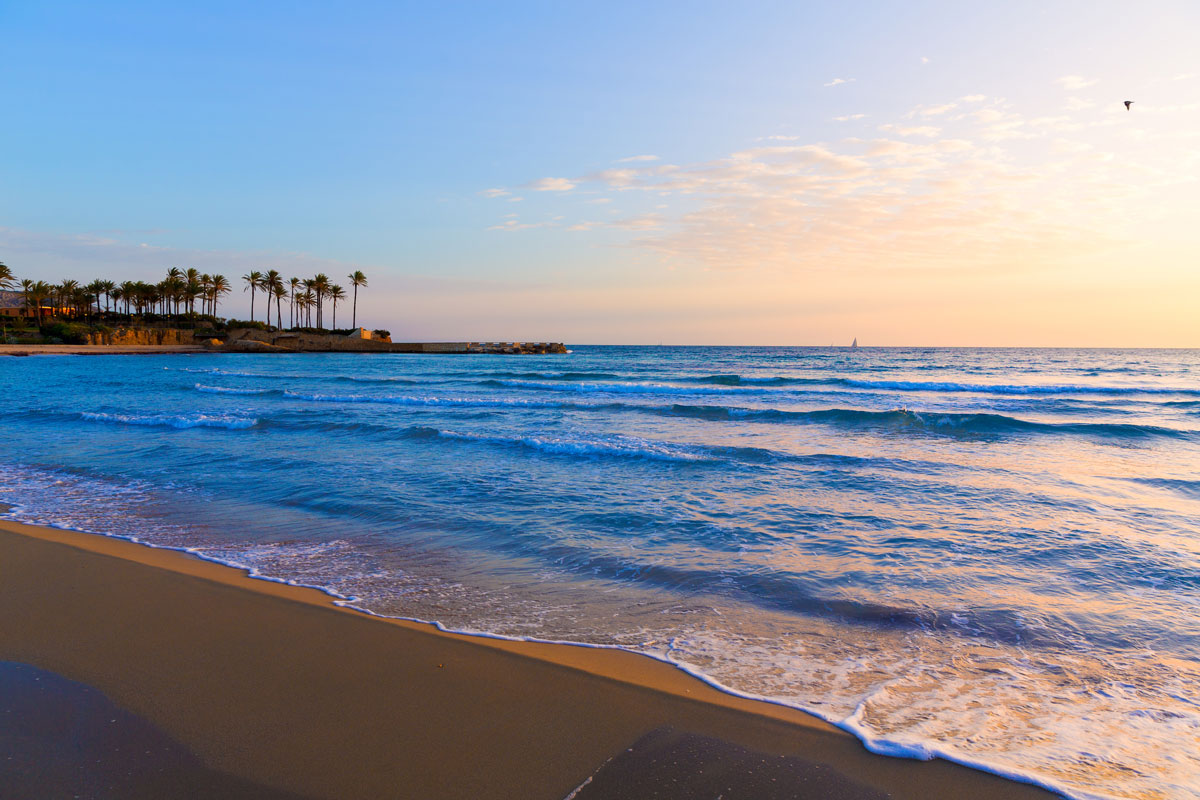
- Family fit: Excellent. Lifeguards in season, shallow entry, full services. Full wheelchair and disabled access.
- Snorkelling / diving: Limited — sandy bottom, better suited to swimming and watersports.
- Access: Direct by road and on foot. Multiple car parks on Avenida Arenal and surrounding streets.
- Services: Full — sunbeds, parasols, showers, toilets, restaurants on the promenade.
- Blue Flag status: Yes — consistently awarded for water quality and facilities.
- Dogs: Not permitted on the beach from June to September.
La Grava Beach: the port's own shore
La Grava sits in the fishing district of Duanes de la Mar, in the urban heart of the Port neighbourhood. Sandy, relatively calm, and well-equipped — with a different feel to Arenal: quieter, more local, and directly connected to the everyday life of the port quarter.
The Church of Our Lady of Loreto — Jávea's striking mid-century modernist building — overlooks the beach from Calvario Hill, and the port itself is a short walk away, where the fishing boats come in each morning. The promenade behind La Grava is lined with terraces and seafood restaurants.
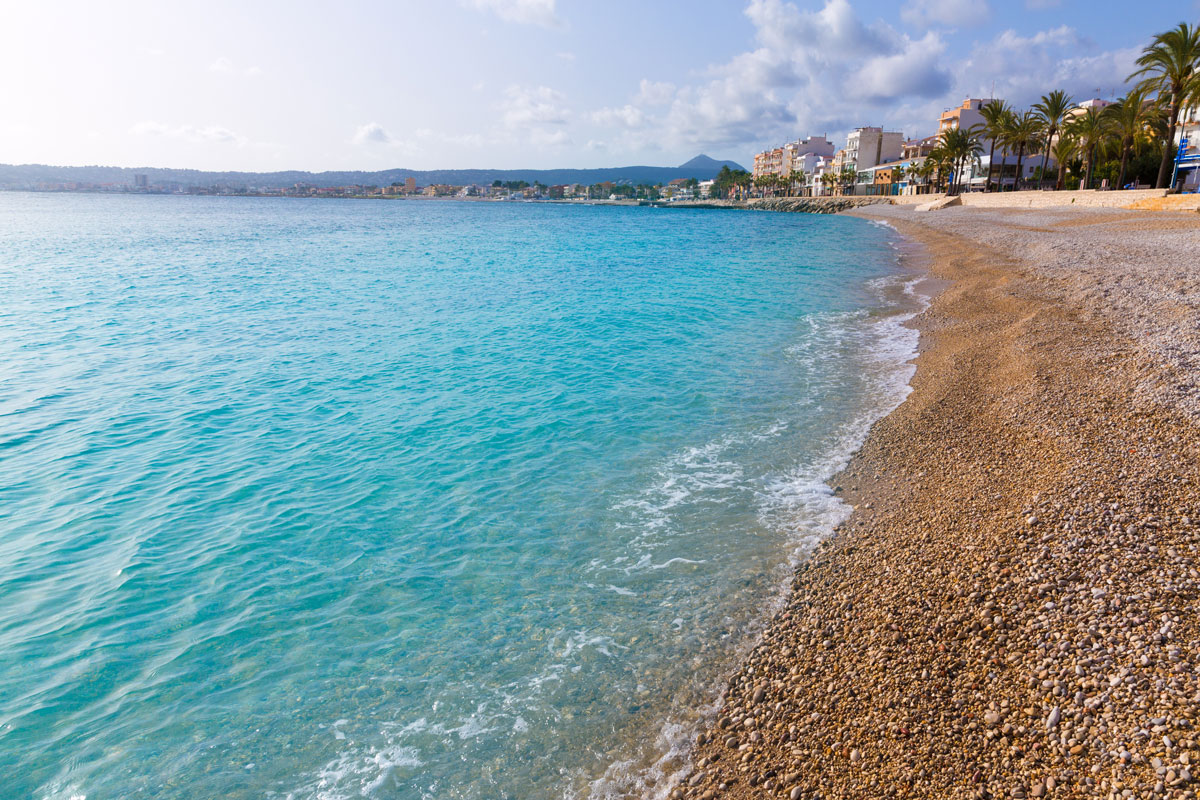
- Family fit: Good. Calm water, full services, easy promenade access. Accessible for wheelchair users.
- Snorkelling / diving: Limited from the beach itself; better options a short way along the coast.
- Access: Central to the Port area. Parking available in the port district.
- Services: Full — sunbeds, parasols, showers, restaurants, cycle path.
- Blue Flag status: Yes — consistently awarded.
- Dogs: Not permitted on the beach from June to September.
Cala Granadella: the cove everyone comes for
Granadella is the cove that appears in every photograph of Jávea's coast. Set within the Montgó Natural Park, it is a small, steeply enclosed cove where cliffs drop directly to crystal-clear turquoise water. The water here is among the clearest on the Costa Blanca.
The seabed is pebble and rock, which is why the water has such exceptional visibility and colour. Water shoes are strongly recommended. The combination of depth, clarity, and marine life makes it the best snorkelling and diving beach in the municipality.
The paid car park holds approximately 200 cars and costs around €5–7 per day in summer. It can fill by 10:00 a.m. from July onwards — arrive early. Restaurants and bars at the cove are worth booking ahead for lunch. Note that parts of the cove are naturist-friendly.
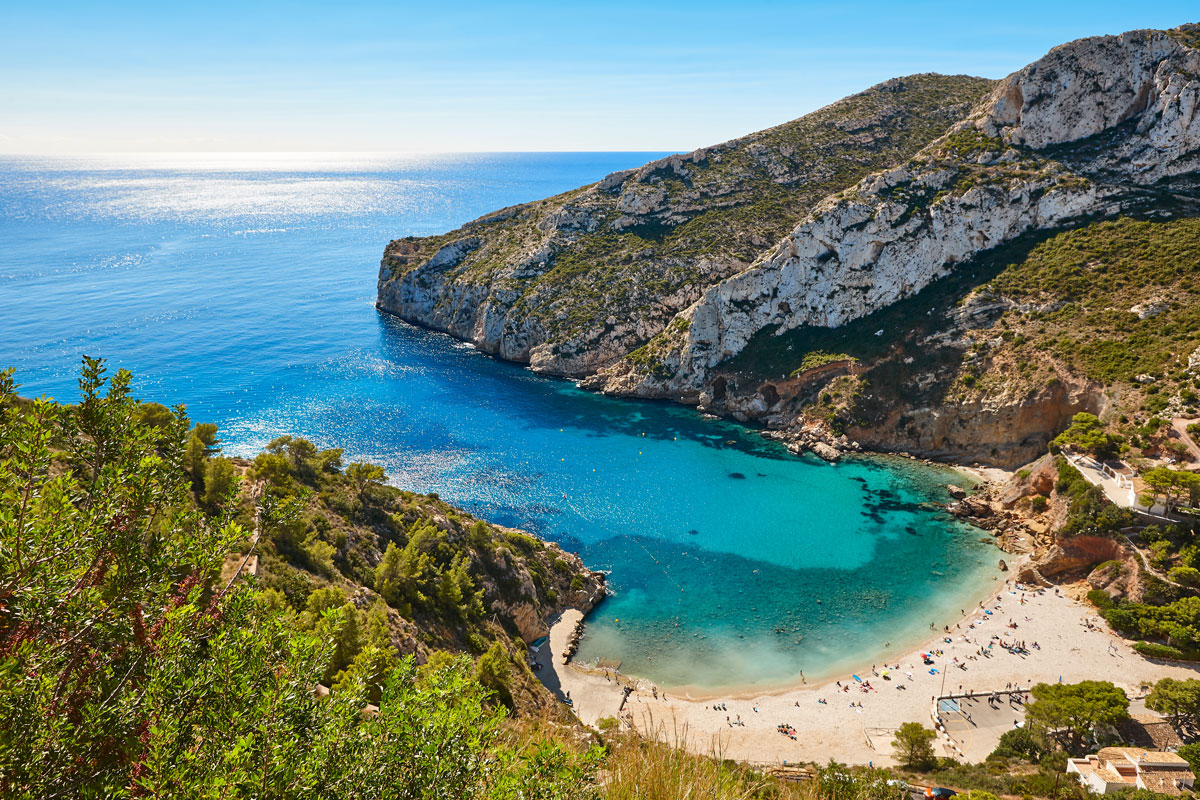
- Family fit: Good with older children comfortable on pebble. Young toddlers may find the entry tricky. No disabled access to the water's edge.
- Snorkelling / diving: Excellent — the best in Jávea. Rich marine life, clear water, rocky seabed.
- Access: Paid car park above the cove (~€5–7/day, ~200 spaces). Short steep descent on foot.
- Services: Restaurants and bars at the cove. No sunbed hire — bring your own towel and mat.
- Blue Flag status: Yes — Granadella holds Blue Flag status.
- Water shoes: Strongly recommended — pebble and rock entry.
Granadella is inside the Montgó Natural Park. Do not remove rocks, shells, or marine life. Anchoring boats in certain zones is restricted.
Cala del Portitxol (La Barraca): drama and depth
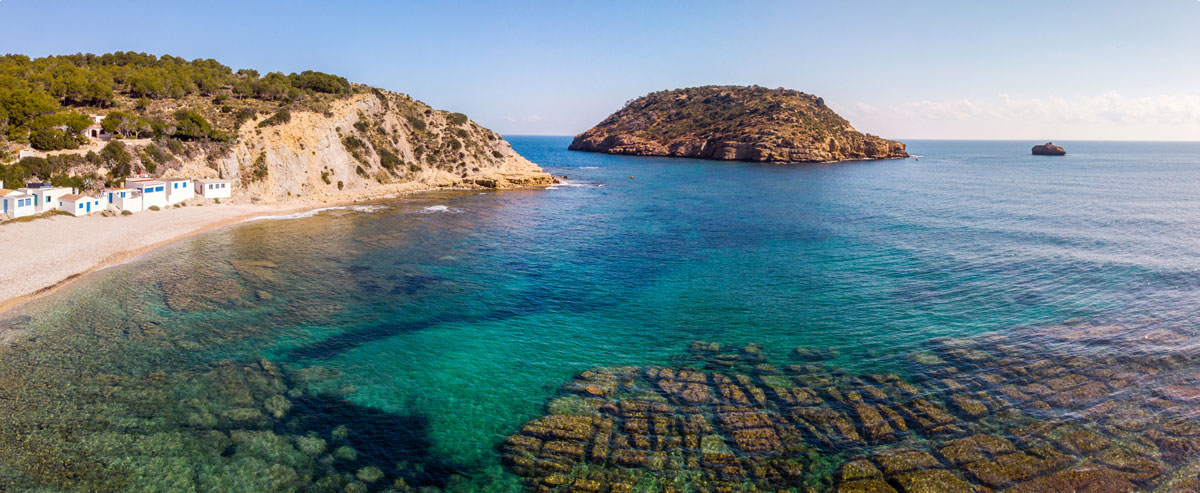
Cala del Portitxol — also known locally as Cala de la Barraca — is one of the more spectacular stretches of Jávea's coastline. At roughly 900 metres it is longer than most of the coves in the area, framed on both sides by dramatic limestone cliffs and dense Mediterranean vegetation.
The water is clear and deep near the cliff faces, making it particularly good for swimming and snorkelling. Reached via the Cabo de la Nao road, with access on foot from the Mirador de la Cruz del Portitxol. During summer, the local council limits car access — arriving before 9:30 a.m. in July and August is advisable.
- Family fit: Good for swimming families. Less suited to very young children given the terrain on approach.
- Snorkelling / diving: Very good. Clear water along the cliff faces, interesting seabed.
- Access: Via Cabo de la Nao road; foot access from Mirador de la Cruz del Portitxol. Summer access restrictions apply — check current regulations.
- Services: Limited. No sunbed hire; no bars at the cove itself.
- Water shoes: Recommended for rocky entry.
Cala Sardinera: the quieter alternative
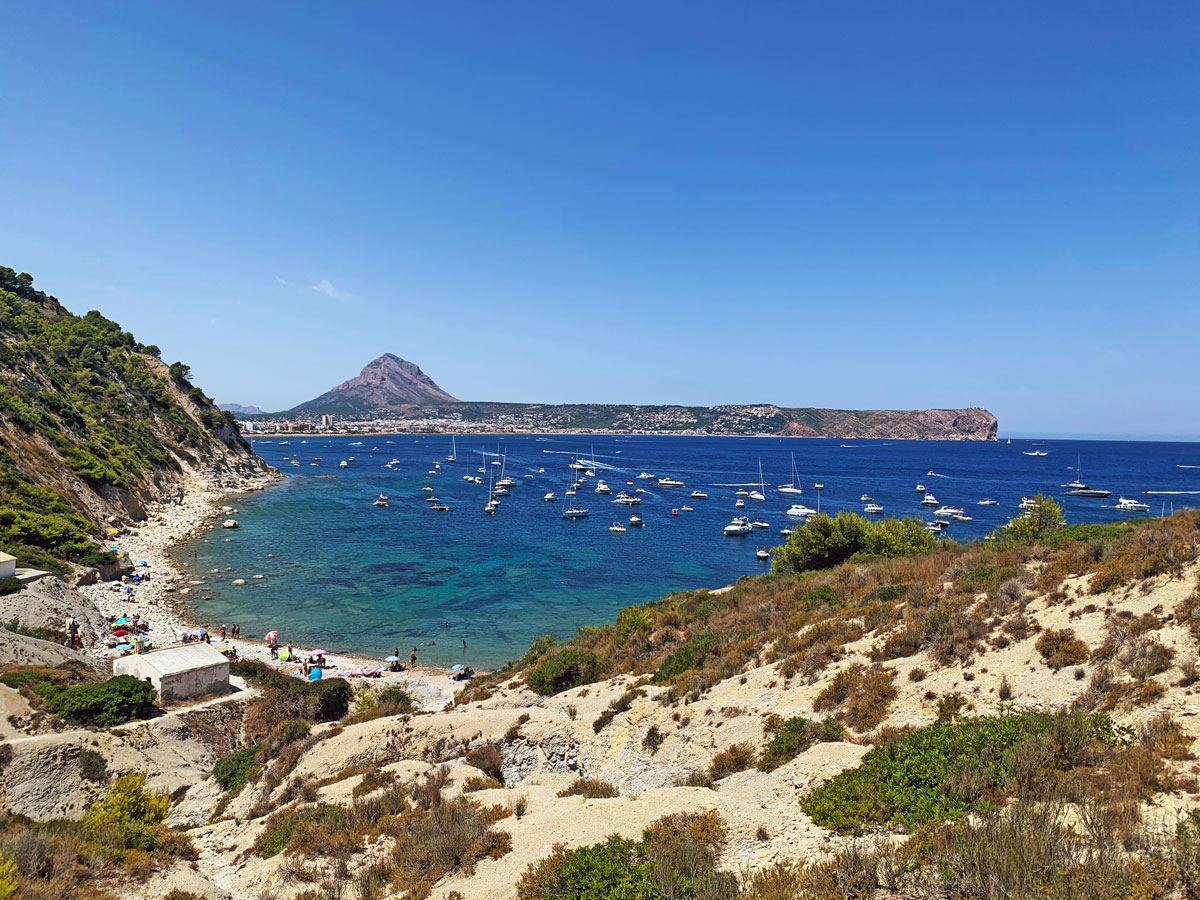
Cala Sardinera is one of Jávea's best-kept secrets: a small, pebble-based cove accessible only on foot via a scenic coastal path, with no bars, no sunbed hire, and no road access. In return, it offers the kind of calm that has become genuinely rare on the Costa Blanca in summer.
The underwater visibility here is excellent — Sardinera sits close to the Cabo de San Antonio marine reserve. Snorkelling is the main draw, with rich marine life and clear rocky seabeds. Come prepared: there are no services of any kind.
- Family fit: Good for older children and adults comfortable on pebbles and coastal paths. Not suited to prams or very young children.
- Snorkelling / diving: Excellent. Among the best snorkelling in the municipality.
- Access: On foot via coastal path only. No road or car park access to the cove.
- Services: None. Bring everything you need.
- Water shoes: Essential — pebble base throughout.
Cova Tallada: the sea cave at Cabo de San Antonio
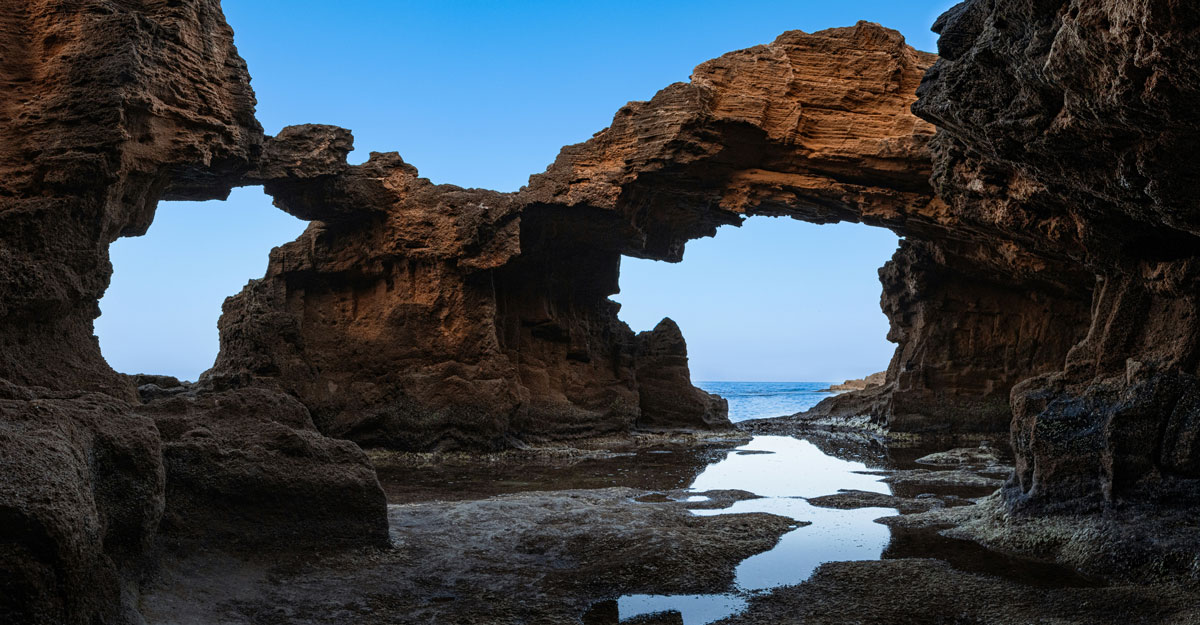
Cova Tallada is unlike anywhere else on the Jávea coast. A sea cave carved into the limestone cliffs of Cabo de San Antonio — used for centuries as a stone quarry, now protected as part of the natural park — where sunlight bounces off the water onto ancient rock walls. One of the most extraordinary natural spaces on the entire Costa Blanca.
You can approach on foot along the PR-CV 355 coastal trail from the Port of Jávea (~2 h 20 min) or from the Sanctuary of the Mare de Déu dels Àngels on the Montgó plateau (~40 min). Arriving by kayak or boat from Cala Granadella is increasingly popular. From the Dénia side, the Les Rotes approach is 1.5 km but takes close to an hour — rated high difficulty.
| Approach | Starting point | Distance / time | Difficulty |
|---|---|---|---|
| From Jávea (Port) — PR-CV 355 | Port of Jávea | ~2 h 20 min one way | Moderate |
| From Montgó plateau | Sanctuary of the Mare de Déu dels Àngels | ~40 min one way | Moderate |
| From Dénia (Les Rotes) | Near Mena Restaurant, Monyo Canyon road | 1.5 km / ~1 hour | High |
| By kayak or boat | Cala Granadella or Port of Jávea | Variable | N/A |
Permit required 15 June – 30 September: access — both by land and by sea — requires prior online authorisation through the Generalitat Valenciana's natural parks system. This is legally required and enforced. Apply in advance; spaces are limited and should be booked well ahead in peak season.
Cala Blanca and Cala en Caló: two more worth knowing
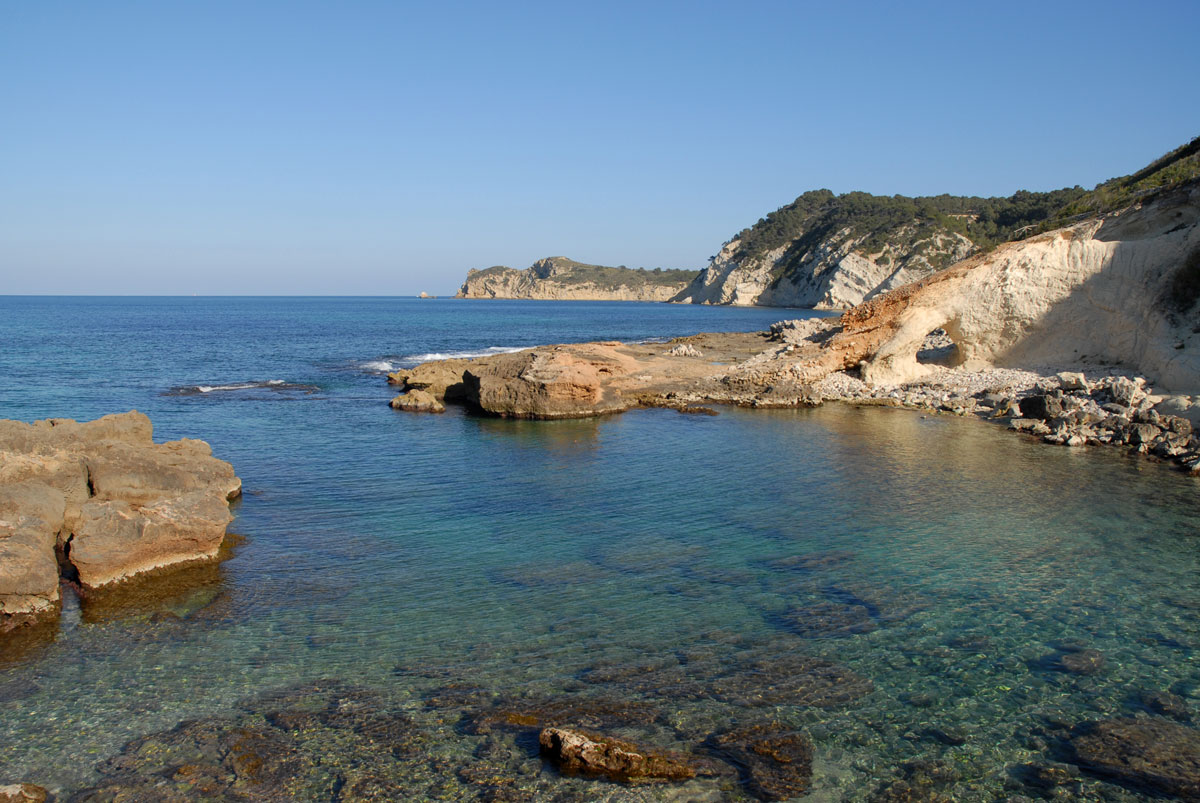
Cala Blanca (also known as La Caleta) is a small horseshoe cove with three sub-coves — Caleta I, Caleta II, and Caleta del Francés — characterised by striking white limestone rock and exceptionally clear water. Accessible only on foot via cliff steps from the Mirador de Cala Blanca. One of the best snorkelling spots in the area and notably less visited than Granadella.
Cala en Caló is accessible by sea only — kayak or boat. It sits at the foot of a canyon and is known for cliff jumping, snorkelling, and an underwater cave system. There is no land access whatsoever. Best reached by kayak from Cala Granadella as part of a guided tour.
- Cala Blanca: foot access only via cliff steps from Mirador de Cala Blanca; excellent snorkelling; white-rock seabed; no services.
- Cala en Caló: boat or kayak access only — no land route exists; cliff jumping and underwater caves; best via guided kayak tour from Granadella.
- Water shoes recommended for both.
Water sports and guided experiences
The combination of marine reserve water, dramatic coves, and reliable summer weather makes Jávea one of the best places on the Costa Blanca for sea-based activities.
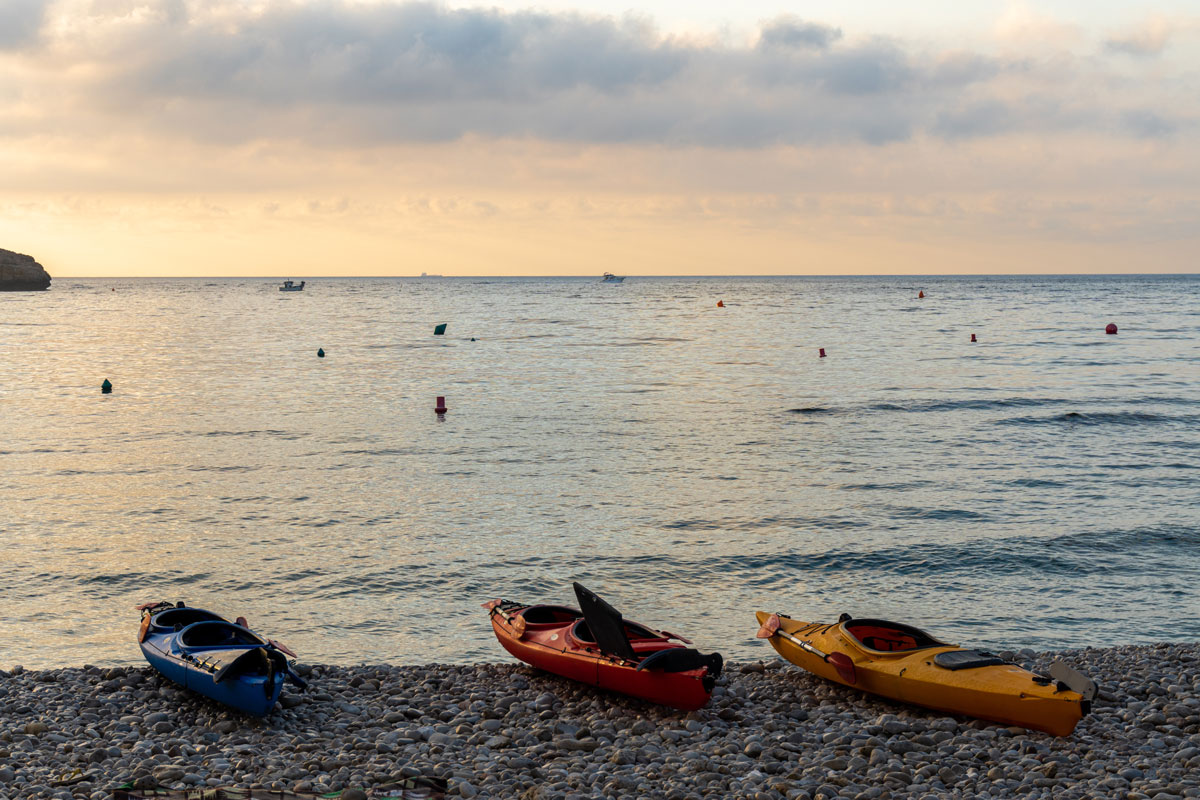
Kayak Jávea runs guided kayak and snorkelling tours from Cala Granadella covering Isla Descubridor, Cala Ambolo (by sea), Cova del Llop Marí, and Cala Caló — including coves inaccessible by land. No prior experience required. Contact: info@kayakjavea.com · 679 753 761.
Navega Mediterráneo offers 3-hour sailing experiences from the Club Náutico in the Port, passing Cabo de la Nao, the Montgó headland, and Granadella. Contact: info@navegamediterraneo.com · 672 867 787.
Mundo Marino runs day cruises linking Jávea and Dénia along the Cabo de San Antonio reserve coastline. Contact: reservasjavea@mundomarino.es · 966 423 066.
Getting there: access, parking, and seasonal restrictions
The coves and most beaches are accessible year-round in Jávea's climate. Outside July and August, you can reach Granadella, Portitxol, and Cova Tallada (outside the permit window) with ease and usually with the cove largely to yourself. Spring and early autumn — April, May, June, September, October — offer the best combination of warm water, manageable crowds, and full sunshine.
July and August are peak season. Arriving early (before 10:00 a.m.) for the coves is essential. Check the Jávea Town Hall website for the current summer access plan before travelling.
| Beach / Cove | Parking | Summer notes |
|---|---|---|
| Arenal | Multiple car parks on Avenida Arenal | Fills quickly July–August; arrive before 10:00 a.m. |
| La Grava | Port district car parks | Generally easier than Arenal; short walk from most port parking |
| Granadella | Paid car park above cove (~€5–7/day, ~200 spaces) | Can fill by 10:00 a.m. in peak summer; arrive early |
| Portitxol | Roadside near Mirador de la Cruz del Portitxol | Summer access restrictions apply; check current regulations |
| Sardinera | No car park — park on approach roads and walk | Foot access only |
| Cova Tallada | No dedicated parking at trailheads | Permit required 15 June–30 Sept; check availability before travel |
| Cala Blanca | Park at Mirador de Cala Blanca | Foot access via cliff steps from mirador |
Dogs are generally not permitted on Blue Flag beaches (Arenal and La Grava) from June to September. Rules for coves vary — check with the Jávea Town Hall for current dog policy. Occasional jellyfish are reported in the bay during August and September — check local beach reports before swimming.
Sea temperatures throughout the year
Jávea's sea temperatures make it one of the more year-round-usable stretches of the Costa Blanca. The water is comfortably warm for swimming from late May through to October. Outside those months it is cold by most standards, though dedicated swimmers and divers use it year-round.
| Month | Approx. sea temperature |
|---|---|
| January | 14°C |
| February | 14°C |
| March | 15°C |
| April | 16°C |
| May | 19°C |
| June | 22°C |
| July | 25°C |
| August | 27°C |
| September | 25°C |
| October | 22°C |
| November | 18°C |
| December | 15°C |
Which beach suits which buyer or family
The beach question comes up consistently with buyers and families in early conversations. The short answer: the beach you're closest to will become the one you love most, and Jávea's are diverse enough that very different preferences are all well served.
Properties in the Arenal district are closest to the sandy beach. Properties in the Port are closest to La Grava. Buyers looking at the southern and rural zones (Montgó slopes, Cap de la Nao, Benitachell border) have the easiest access to the coves — though all of Jávea's beaches are within 20 minutes of each other by car.
| Profile | Recommended beach | Neighbourhood link |
|---|---|---|
| Families with young children | Arenal | Arenal district |
| Those wanting a local, quieter beach | La Grava | Port |
| Snorkelling and nature lovers | Granadella or Sardinera | Cabo de la Nao / rural south |
| Active couples, hikers, divers | Cova Tallada or Portitxol | Rural south / Cap de la Nao |
| Buyers wanting beach within walking distance | Arenal (Arenal area) or La Grava (Port area) | — |
| Those who want cove access with some services | Granadella | — |
| Those happy with a short drive for solitude | Sardinera or Cala Blanca | — |
Frequently asked questions
Which is the best beach in Jávea for families with young children?
Arenal Beach is the clear first choice — wide sandy beach, calm shallow water, lifeguards in season, full services, and a promenade with cafés and restaurants behind it. It also has full wheelchair and disabled access. La Grava in the Port is a strong second option with a quieter, more local atmosphere.
Which cove has the best snorkelling in Jávea?
Granadella and Sardinera are the two standouts. Granadella has services at the cove and better parking access. Sardinera is more secluded with no services, but the underwater visibility is excellent and it is less crowded. Both benefit from proximity to the Cabo de San Antonio marine reserve.
Do I need a permit to visit Cova Tallada?
Yes, between 15 June and 30 September, access to Cova Tallada — whether on foot or by sea — requires prior online authorisation through the Generalitat Valenciana's natural parks booking system. There is no charge for the permit, but spaces are limited and should be booked well in advance. Outside this window, no permit is required.
Is Granadella busy in summer?
Yes. The paid car park (approximately 200 spaces, around €5–7/day) can fill by 10:00 a.m. in July and August. Arriving early, visiting on a weekday, or coming outside peak season (April–June, September–October) significantly improves the experience.
Are any beaches or coves currently closed?
Yes. Cala Ambolo is closed — road access has been permanently closed due to landslide risk (accessible by kayak from Granadella only). Cala Tango is closed due to rockfall risk from the cliffs above. Do not visit either on foot. Always check current status with the Jávea Town Hall before visiting less-known coves.
Are dogs allowed on Jávea's beaches?
Dogs are generally not permitted on Blue Flag beaches (Arenal and La Grava) from June to September. Rules for the coves and other stretches vary. Check with the Jávea Town Hall for the current dog-friendly beach policy before your visit.
Which beaches have Blue Flag status?
Arenal Beach, La Grava Beach, and Cala Granadella have all held Blue Flag status. The award recognises water quality, beach management, and facilities. Other coves are unclassified — their water quality is generally equal to or better than the awarded beaches given the marine reserve influence.
What are the water temperatures like throughout the year?
Jávea's sea temperatures range from approximately 14°C in January and February to 26–28°C at peak summer in August. The water is comfortably warm for swimming from late May through to October — roughly five months of the year.
Are the coves accessible without a car?
Arenal and La Grava are the most accessible on foot or by bike from their respective neighbourhoods. The coves require a car or cycling along the coastal road. Some seasonal shuttle services operate to the more popular coves; check with the Jávea Tourist Office for current routes.
Continue your search
Neighborhood links
Property links
Other articles
Healthcare in Javea and Denia: 2026 Complete Expat Guide
Everything international families and buyers need to know about healthcare in Javea and Denia: public and private hospitals, how to get your SIP card, private insurance options, dental care, pharmacies, and what to do in an emergency.
Javea Schools Guide 2026: A Real Family Relocation Playbook
Built from real family relocation conversations in Javea: school options, what daily life actually looks like, verified social links, camp notes, and planning steps that reduce stress.
Living in Javea (Xabia): 2026 Family and Lifestyle Guide
A complete overview of climate, neighborhoods, schools, healthcare, and everyday life in Javea for families planning a move in 2026.
Need a shortlist that fits your move plan?
We can map your family profile and timing to specific areas, active listings, and a realistic buying timeline.